By: Lauren Stoppenhagen
Springtime brings a sense of anticipation and change, not just in our natural surroundings, but also with major life transitions such as graduations, relocations, and marriages. With these changes, we find ourselves in new communities, eager to form relationships and feel at home. Why does this feel increasingly difficult for young adults? I would argue a contributing factor is an inevitable shift that occurs as we grow from childhood into adulthood. Instead of being largely circumstantial, community becomes shaped by choice.
This isn’t intended to be a list of practical tips and tricks, but simply a subtle change in perspective. In fact, it may mean that establishing relationships within a community becomes more gradual and sacrificial. Over time, I’ve begun to think more intentionally about community as attached to a physical space, rather than a purpose, person, or interest. This is shifting my understanding of community from a framework for my personal fulfillment to an opportunity to love and serve others in a particular place.
Wasn’t making friends so much easier when we were kids? Perhaps it seemed effortless because connection wasn’t something we had to seek out, it was simply embedded in everyday life. For the most part, kids don’t have access to anything beyond their physical reality. Their social circles are predetermined by their family, neighbors, education, and churches and are bound by physical proximity, not identity or choice. In this way, community is more passive and organic for children. At a church I once attended, I was always struck by how the kids moved around in a pack from the sanctuary to Sunday school to the playground outside. When new kids showed up, whether for a single visit or long term, they were absorbed into the pack. Church community wasn’t about their personal satisfaction; it was a shared reality in which caring for others in their immediate vicinity—whether they chose them or not—was simply part of the rhythm of life.
As we get older, communities morph into something that we primarily choose, especially when the digital world is involved. College is a time in life when choice in community becomes particularly pronounced. We suddenly have significant control over how we spent our time. Our pool of potential friends is widely expanded. We join organizations and societies based on shared interests and potential status. If we move away from home, we must balance important relationships in two or more geographical locations. Phones and social media enable us to prioritize physically distant relationships over the people right in front of us. As a result, this tends to be a time of turning in on oneself. Community becomes reduced to a matter of personal preference rather than a responsibility to the people around us.
To be sure, our adult communities cannot be predetermined as they once were when we were children, especially given the interconnectedness and mobility of today’s society. In reality, we do have relationships near and far that we must steward. However, we can still draw from the wisdom of the way children live in community. As you carefully make decisions for the formation, stability, and well-being of yourself and your family, pay more attention to the things that you can’t control. There are often opportunities to serve there. You might pick a church that aligns with your confession, but you can’t select the people who sit in the pews. You may pick the safest neighborhood with the most convenient commute, but you can’t control who lives in the house next to you. Wherever possible, invest your time and effort into those people, who are your embodied community. Not able to start that homestead yet? Plant a community garden with some friends. Hoping to have a family someday? Volunteer in the nursery at your church. Feeling isolated? Visit your elderly neighbor.
Ultimately, viewing community as a physical place to live and serve within is an important step toward fostering more robust, sustainable relationships. It has reduced my perceived choices and as a result, directs my mind away from becoming self-absorbed during naturally opportunistic times in life. Facing big life transitions as a young adult with this in mind might not make life easier or more convenient, but it grounds you in a truth outside of yourself.
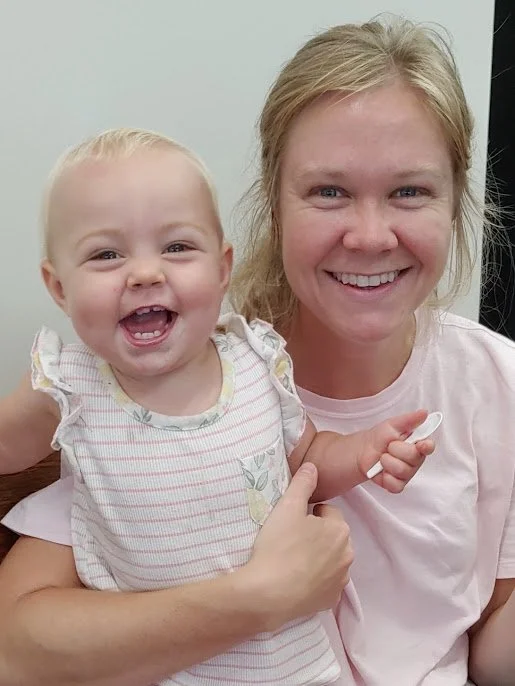
Lauren Stoppenhagen
I’m currently a stay-at-home mom and our family recently moved to Hillsdale. (No, neither of us works at the college. But my sister does!) I lived in three different cities in Germany for a total of four years and in our first five years of marriage, my husband and I lived in four states. My adult life has been characterized by transitioning and settling into new communities so here are some things I have learned along the way!
Email: laurenstoppenhagen@gmail.com